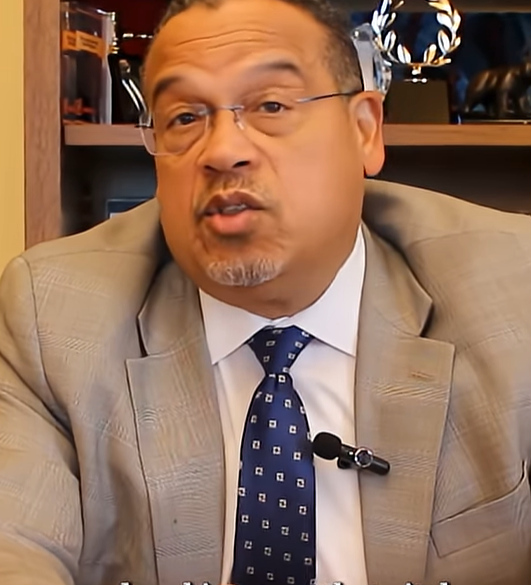
Minnesota Attorney General Keith Ellison stood at a campaign event for Lieutenant Governor Peggy Flanagan's progressive Senate bid and rattled off exactly who Democrats plan to round up for the next election cycle. "There's a whole lot of people who were not naturalized citizens in the last election," Ellison told the crowd.
Did Ellison just admit Democrats are giving citizenship in exchange for votes? The quote in its entirety leaves no room for error. "There's a whole lot of people who were not 18 years old in the last election. There's a whole lot of people who were not naturalized citizens in the last election. There's a whole lot of people who sat it out because of whatever reason in the last election. But you know what? We gonna get them all this election."
Here's what makes the clip harder to dismiss as a gaffe: Ellison said nearly the same thing six months ago. In a January interview with Katie Couric, he used almost identical language. "There's a whole lot of people who were not, uh, naturalized citizens in the last election and were not old enough to vote in the last election, and who somehow just sat it out because they didn't like the choices in the last election. There's a whole lot of people to organize."
That's not a slip. That's a talking point. One he's comfortable enough to repeat at public events, on camera, months apart.
Ellison's credibility on questions of institutional integrity isn't exactly sterling. The Minnesota AG met with at least six members of a Somali family involved in a $14 million federal child nutrition fraud scandal. All six pleaded guilty or entered no-contest pleas. His office has never adequately explained the nature of those meetings.
The standard Democratic response to election integrity concerns has been the same for years: voter fraud is a myth, non-citizen voting doesn't happen, and anyone who says otherwise is trafficking in conspiracy theories. That line works better when your own state attorneys general aren't on camera promising to harvest votes from people who weren't citizens during the last cycle.
When the guy whose job is enforcing election law keeps describing his voter outreach strategy in terms that sound like an election integrity violation, maybe the myth of election fraud isn't as mythical as advertised.