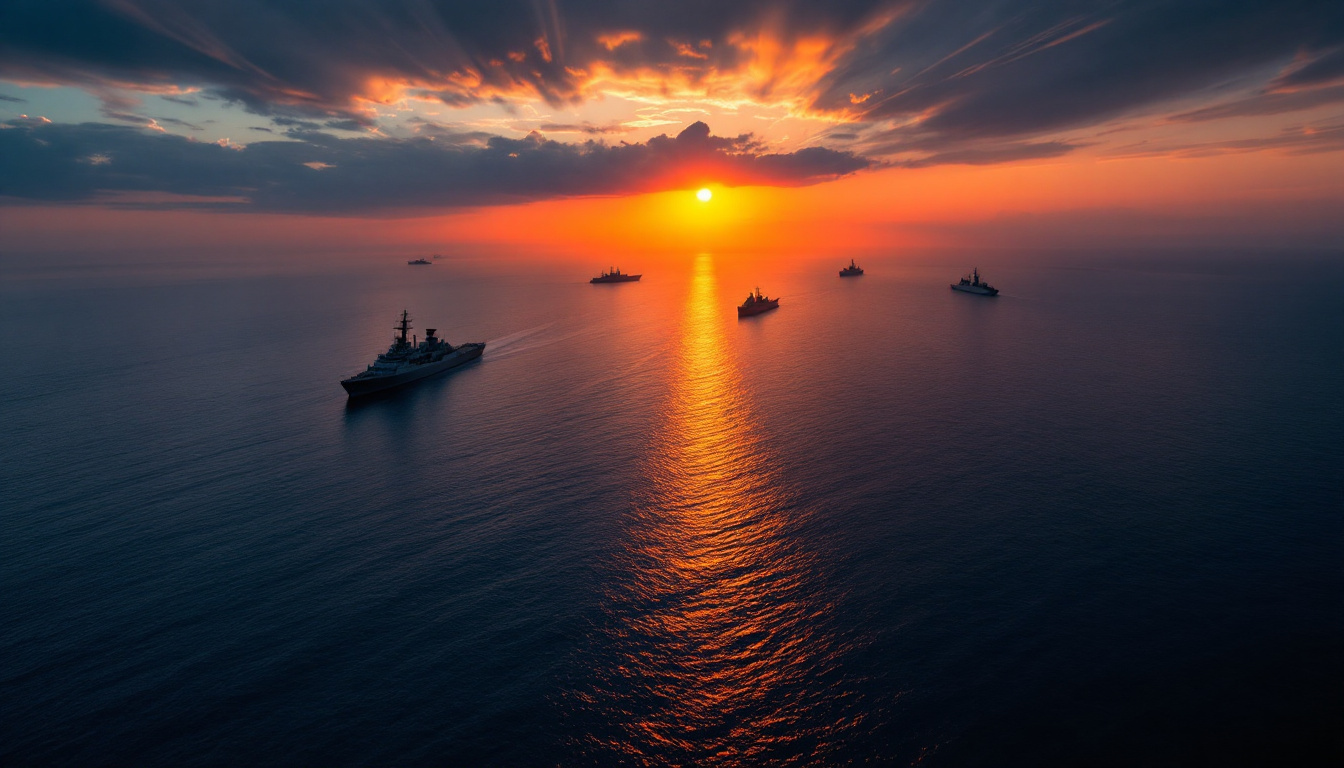
On Thursday, a one-way drone slammed into the M/V Ever Lovely, a Singapore-flagged cargo ship transiting the Strait of Hormuz off the coast of Oman. By late Friday, carrier-based aircraft and guided missile destroyers were lighting up Iranian missile sites, drone facilities, radar installations, and command-and-control infrastructure across the country.
That's how fast things move when the adults are running the building.
The strikes came after Iran's Revolutionary Guard Corps targeted the Ever Lovely in what U.S. Central Command described as "a proportional but decisive response designed to safeguard international maritime flow." A senior U.S. official put it more plainly: "We met hostility with strength." That's a sentence that hasn't come out of Washington with any conviction in about a decade, and it landed with the subtlety of a Tomahawk through a radar dish.
War Secretary Pete Hegseth's department coordinated the response, which hit multiple categories of Iranian military infrastructure simultaneously. Not a single target was civilian. Not a single strike was a "warning shot." The message wasn't diplomatic — it was kinetic.
The Strait of Hormuz isn't some abstract geopolitical chess piece. Nearly one-fifth of the world's oil supply transits through that narrow channel every single day. When Iran parks a drone in the side of a cargo vessel there, they're not just attacking one ship — they're holding a lighter next to the global economy's fuel line.
Iranian state-run media, doing what Iranian state-run media does, claimed the strikes caused only "minor impacts" and that "operations continue as normal." An anonymous Gulf official offered the counterpoint that "Iran's aggression cannot go unanswered" — a sentiment that appears to have majority support among regional partners who've spent years watching Tehran push boundaries without consequence.
This all happened, by the way, roughly one week after a two-month ceasefire accord was signed. Iran lasted about seven days before testing it. The ceasefire ink was still tacky when the IRGC launched a drone at a commercial vessel in one of the most strategically critical waterways on Earth. That's not a violation born of ambiguity or miscommunication. That's a country telling you exactly what it thinks of your agreement.
The contrast with prior approaches is worth noting on the merits, not the politics. From 2015 through 2020, the preferred American response to Iranian provocation was some combination of stern language, back-channel negotiations, and the occasional unfreezing of assets. Iran's nuclear program advanced. Its proxy network expanded. The IRGC's budget grew. The policy of strategic patience produced strategically patient enemies who kept building.
What changed isn't complicated. When a drone hits a cargo ship on Thursday and the response hits Iranian military infrastructure on Friday, the calculation shifts. Not because of rhetoric — because of craters where radar installations used to be.
The question now isn't whether the strikes were justified. CENTCOM handled the legal framework, the targets were military, and the provocation was an attack on international shipping in a waterway that keeps the lights on across three continents. The question is whether Tehran processes the information correctly.
History suggests they'll test the line again. But the line just got a lot more expensive to cross.